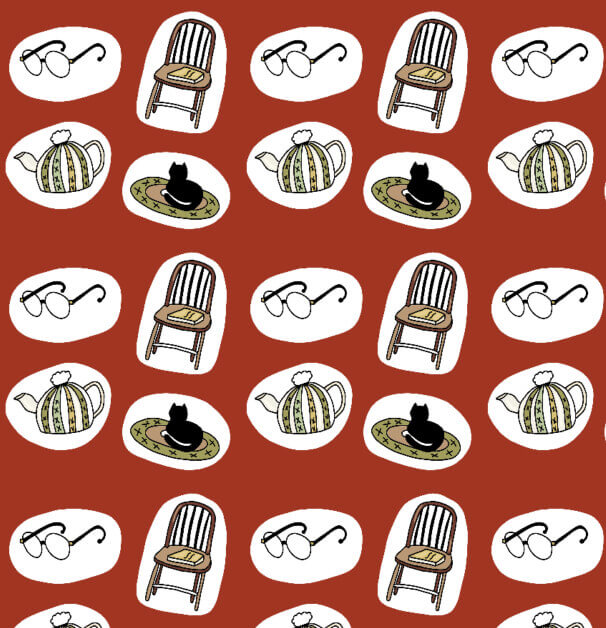
Going to Nanna and Grandad’s house was like stepping back into the 1930s and 40s. It was so cosy. Nanna taught me to make jam, bake pies and knit, and this collection is inspired by those visits.
The prints
Each print is a little scene I imagined from those days.
Jam Making

A morning spent picking blackberries along the country lanes. The sugar is weighed, the jars are ready and the water is boiling for an afternoon of jam making.
Pie Making

The Aga warms the tiled kitchen floor. Flour, butter and a dash of milk make a lovely crust for tonight’s chicken pie and gravy.
Home Sweet Home

A cold winter’s Sunday afternoon. The cat is curled up on the rug by the coal fire, and it’s time to settle down with a pot of tea and a good book.
Knitting Break

The front step is scrubbed and the windows cleaned with vinegar and newspaper. Time for some knitting from Woman’s Weekly in front of the television.
Lilly’s story: an imagined life, based on real history
To design this collection, I imagined a woman from the make do and mend generation. Lilly is made up, but her story is based on real history.
During the Second World War, Lilly managed a munitions factory in Manchester. The bombing was fierce during the Manchester Blitz, with Salford Docks and the city’s warehouses among the targets. Lilly helped with the injured when Salford Royal Hospital was hit. After a night in the air-raid shelter, she still went to work the next day.
When the war ended, so did her job. Men needed work, and women were expected back in the home.
Rationing carried on for years, so Lilly never threw anything away. Every scrap of food and fabric was used. She turned her husband’s old suit into a skirt, and knitted scarves, hats and jumpers while listening to the wireless.
A white wedding was a luxury, so Lilly married in a homemade dress of green crepe, embroidered with green beads. She married the same year as Princess Elizabeth, and it felt wonderful to have something to celebrate again.
A short history of 1930s and 1940s prints
1930s fabrics had a cosy, homely feel: florals, polka dots, tartans and little animals, in soft peaches, pinks, lilacs and blues. It was the era of the tea dress, with puffed sleeves, ruffles and belted waists. Times were hard during the Great Depression, and many women made their own clothes because it was cheaper than buying them.
My favourite 1930s story comes from the USA. Families made dresses from the cotton sacks that flour and animal feed came in. When the mills noticed, they began printing the sacks with pretty patterns so they could be used for dressmaking.
In the 1940s, clothing and fabric were rationed, and women were encouraged to make do and mend. Men’s suits became women’s skirts and jackets, scraps became patchwork quilts and rag rugs, and after the war old blackout curtains became dresses and pyjamas. Some lucky brides even wore parachute silk.
Make it yourself
Just like Nanna, you can make useful, cosy things for your home. Pick a fabric you love and make your own with my free sewing cards. Every make takes 2 hours or less.
These fabrics aren’t on sale right now, but I hope to bring them back. Subscribe below and I’ll let you know.
Leave a Reply