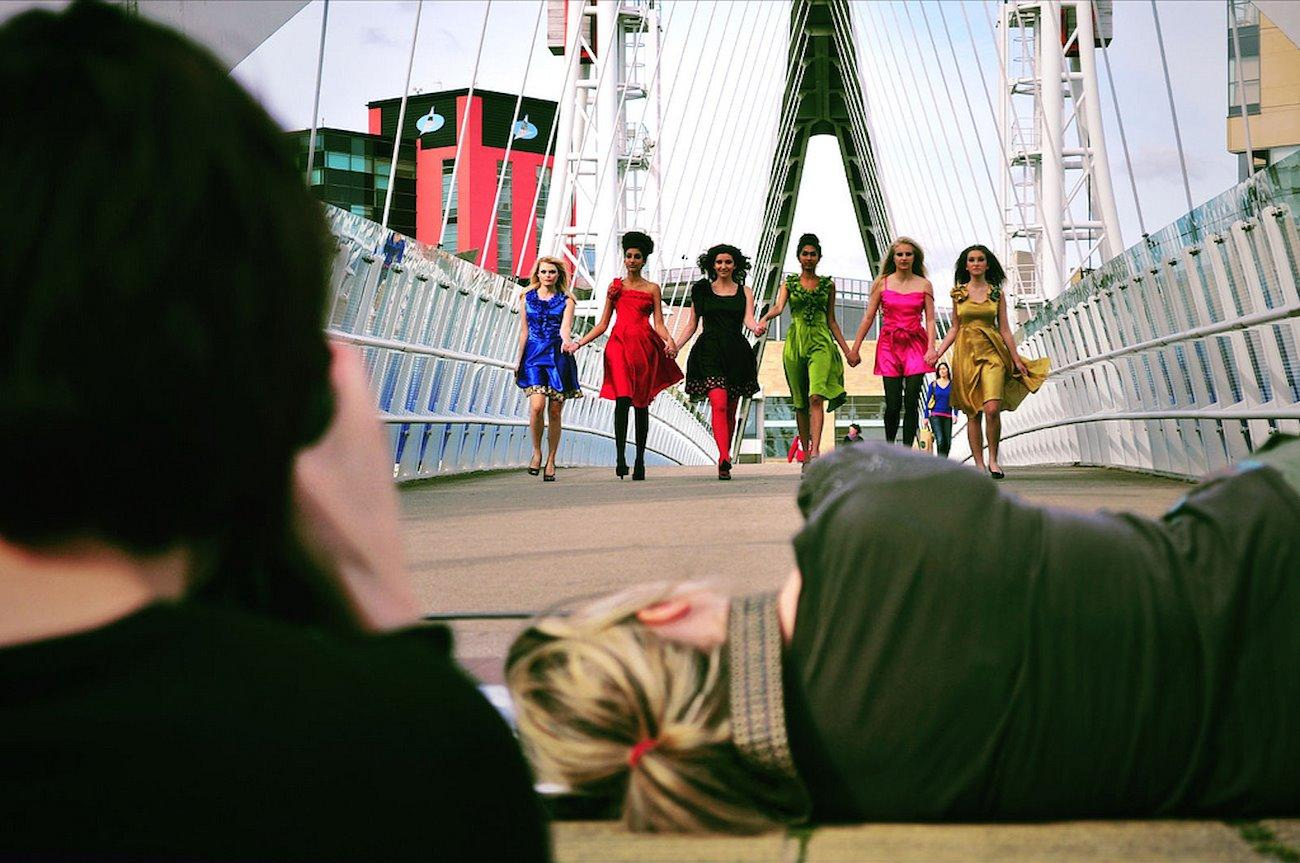
The biggest photoshoot I ever organised was at MediaCityUK in Salford Quays, when I was starting my fashion label. I wanted photos to promote my vintage-inspired fabrics and clothes. The pictures were picked up by The Guardian, Red Online and ASOS Marketplace. Here’s how I pulled it off, with my tips if you’d like to plan your own.

What you’ll need
- A mood board or shoot plan
- Clothes and accessories
- A location
- Models
- Hair and make-up artists
- Photographers
Make a mood board
A mood board (also called a style board or shoot plan) shows everyone the look you’re going for. Collect pictures of shoots you like, plus ideas for hair, make-up, jewellery, location and models. Share it with your team so everyone knows what to aim for.
Clothes and accessories
As a designer, I started by making the collection I wanted photographed. If you’re styling a shoot rather than designing, some shops will lend you clothes. You could also offer to style and shoot a collection for an up-and-coming designer.
Once you have the clothes, plan each look around them, from shoes and tights to jewellery. Buying every small item can cost a fortune, so I asked my models to bring their own accessories. You can also ask designers and shops if you can borrow pieces.
Choose your location
Indoor shoots need special lighting and someone who knows how to use it. I’ve hired photography studios before, but you might only have an hour to get the shot, so it doesn’t always work.
I find the best photos come from shooting outside, somewhere with great buildings. That’s why I chose Salford Quays. One tip: when we started shooting at MediaCityUK, home of the BBC, we were told we needed permission to take photos outside the studios. Always check before you go.
Find your models, hair and make-up artists
I found my models on a modelling website where new models build their portfolios. Many will work for free in exchange for photos. My models included Kelly Jay Warman and YouTuber Hannah Renne. Instagram, Facebook and TikTok are also good places to find people.
Make sure your models suit your clothes, from their hair to their skin tone. The same goes for hair and make-up artists. I worked with recent graduates, who were also happy to work in exchange for portfolio photos.
New models can feel awkward and unsure how to pose, so plan the poses with them before the day.
Book your photographers
I had two excellent photographers on the shoot, Lorna Roberts and Emma Phillipson, so I had plenty of photos to choose from. A third, David Dunkerley, took behind-the-scenes shots. Without a photographer the shoot can’t go ahead, so booking a backup is worth it.
Agree the deal clearly before the day. In the past, a photographer offered to shoot my collection for free, then asked me at the last minute to pay the full cost of the location. Value your own skills: designing clothes takes as much skill as anyone else’s job on the shoot.
Look at a photographer’s work before you book them. A poor photographer, or one who never sends the photos, can cost you a whole day.
After the shoot
Once you have great photos, get them out there. Magazines, bloggers and influencers are always looking for good images, so send them over and ask if they’d like to feature you. ASOS Marketplace put my label on the front page of their website because the photos were so strong, which brought lots of interest and sales.
Top tip: a successful photoshoot is all about organisation. Be kind and polite to everyone on your team. If people see you’re professional, they’ll want to work with you again.
These days I teach beginners to sew. If you’d like to make your own clothes, start with my free sewing cards. One card teaches one skill, and every make takes 2 hours or less. You can also read more about my story.
Leave a Reply