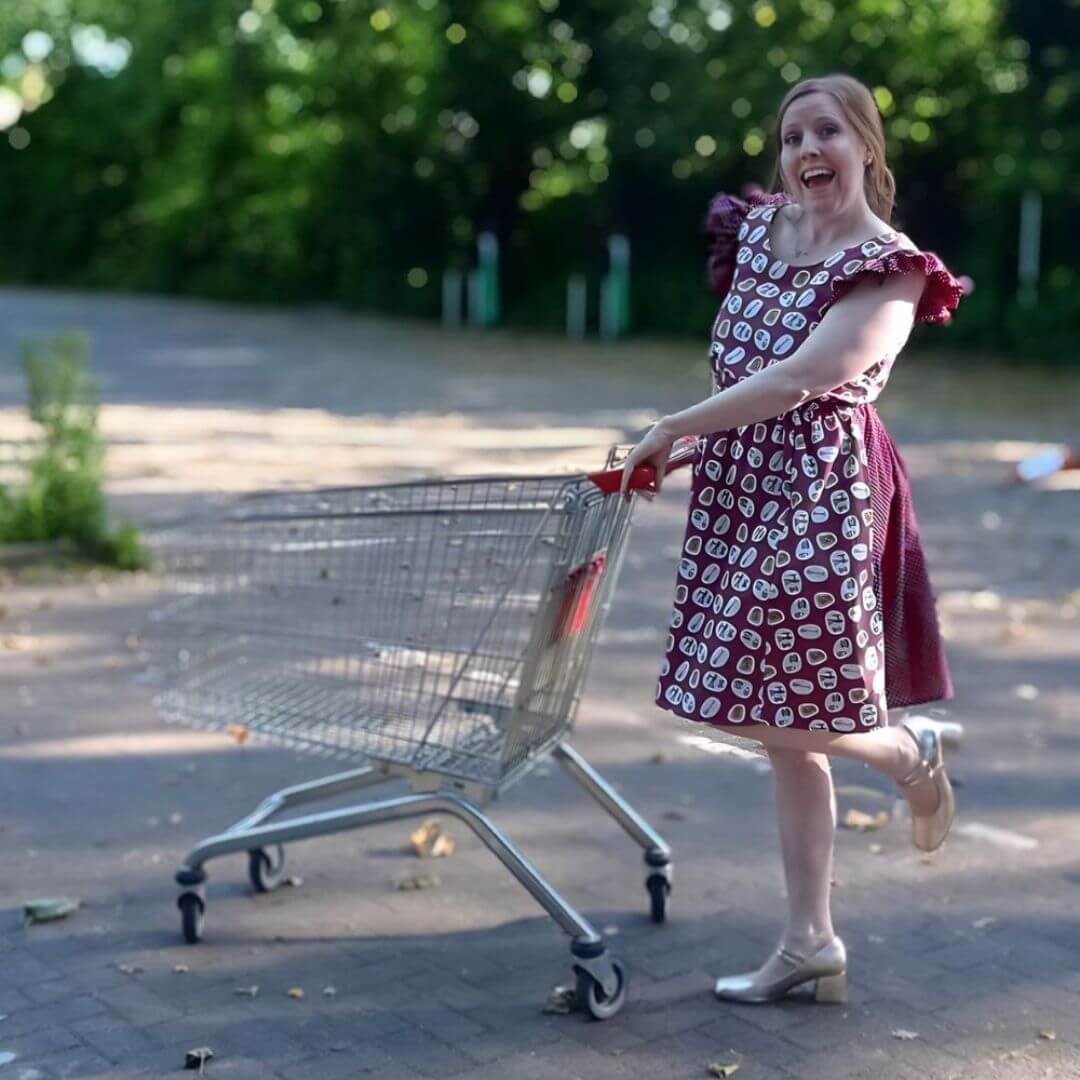
When I was a girl, my big dream was to be a fashion designer with my own fashion company. One day, armed with my laptop and sketchbook, I took the first step. This is the story of how I grew my label into a successful vintage brand, and the pitfalls I faced along the way.
It took just two years of hard work. I had my own studio on Salford Quays, an online shop, and a team of interns working with me. My designs were made in Manchester factories and sold in boutiques across the UK, and I was making online sales as far away as Europe, Russia and the USA.
My stockists included Junk Shop in Manchester, Athena Boutique in Edinburgh and ASOS Marketplace. The label was featured in newspapers, magazines and blogs. One of the highlights was being asked to appear in an advert for Kenco coffee. They wanted me to be seen drinking it!
Why I started
My company was born in my home town of Salford, the city next to Manchester that’s now home to the BBC. I started it in 2008, when online shopping was booming and the world was changing fast.
The towns my grandparents grew up in now existed only in photos. Even my own childhood was becoming a thing of the past. I wanted a way to capture those stories before they disappeared. So I designed my first fabric collection, Victorian Britain, from the stories Nanna Betty told me about growing up in Salford. A world before TV, phones and the internet: poor, but full of charm. You can see all my fabrics in my Storytelling Fabrics Collection.
An ethical Manchester fashion label
Inspired by old-fashioned values, I wanted my fabrics to be reused, remade and kept as family heirlooms. They were printed in the UK with eco-friendly inks, designed to be treasured for a lifetime rather than thrown away.
I’ve always struggled with how unethical the fashion and textiles industry can be, so I committed to making everything ethically. My dresses were made in a UK factory, and my handbags and purses, with their vintage-style clasps, were made in my own studio. My favourite bag is one I still use today.
Finding the money
To start any company, you need money. I won two grants: £1,500 from the Prince’s Trust Enterprise programme (the charity is now the King’s Trust) and £2,000 in the Salford Business Start-up Awards. I’ve never been in debt, so I didn’t want a business loan, even though they were offered a lot when I was starting out.
It took about six months to get the grants. There were lots of meetings about tax, VAT and insurance, and I never held the money myself: it was paid straight to my suppliers.
My studio on Salford Quays
My studio was at Waterside business park on Salford Quays. I made my samples there and ran the website from there, interns sometimes worked alongside me, and I taught very popular dressmaking courses there too.
Working with factories
With my collections designed and the money in place, it was time to find factories to print the fabric and make the clothes. I invested the grants in stock: a collection of 65 digitally printed dresses. Most factories only take minimum orders, and 50 dresses cost well over a thousand pounds to make.
Dealing with factories is risky. The first printer I used printed my fabric with a fault, so it couldn’t be used, and refused to reprint it. As a new designer with no money, there was nothing I could do. Another factory took some of my fabric, then stopped answering the phone. In the end I had the fabric reprinted elsewhere and found a factory that did make the dresses, but I lost £1,500 of my grant money along the way. My advice: always be careful, and never pay up front for more than you can afford to lose.
As vintage became the latest trend, customers started asking me for vintage-style dresses for proms, weddings and posh dos. That inspired my 1950s Prom Collection.
Photoshoots
To get great photos for my website, I organised shoots around MediaCityUK and Salford Quays with photographers including Emma Phillipson, eight models, and a team of hair and make-up artists. I found people through Gumtree and modelling websites, and we usually worked on a skills swap, all working together for great photos to promote ourselves. I share my tips in how to organise a vintage fashion photoshoot.
Getting noticed
My online shop sold my vintage-style purses, handbags, dresses and skirts to customers across the UK and around the world. All my marketing was done online, through Facebook, Twitter, Meetup and Eventbrite. Guest bloggers wrote fashion articles for my site, and I spent a long time building links with other websites. It paid off: my website reached the front page of Google for “Manchester fashion”.
Journalists regularly got in touch. I was asked to appear on a Channel 4 programme and was on BBC Radio Manchester, and the label was featured by BBC Online, The Guardian, Red, Elle and the Manchester Evening News. PR companies invited me to events, including the Manchester Fashion Awards and a clothes swap with Louise Redknapp, and I was asked to judge catwalk shows.
I held my own events too, including a launch party, “Salford Has Talent”, at Mojo in the Rum Room. Salford Online came to film it and vintage blogger Old-Fashioned Sue came along, which created a real buzz. I also ran fashion meet-ups at Sugar Junction in the Northern Quarter.
Fashion shows
My first ever fashion show was Leeds Fashion Show 2008, “Dress Me Beautiful”. I was selected from lots of applicants, and my designs were inspired by 1920s fashion, with every fabric hand-painted: bright, colourful and quirky.
The night itself was chaos. The models were shared between all the designers, so as soon as they’d walked one show, they were being dressed for the next. But seeing my designs on the catwalk was amazing. With professional photographers and magazine journalists interviewing the designers, I was hooked. I was a real fashion designer!
I went on to show my work at Manchester Fashion Network events, and won the Manchester Fashion Awards in 2010, presented by Wayne and Gerardine Hemingway. Here are my tips on how to organise a fashion show and how to sell at vintage fashion fairs.
Why I closed the label, and what came next
Sadly, in the end I couldn’t compete with the rise of fast fashion. I wasn’t willing to make cheap, mass-produced clothes, so I closed the company and went back to teaching.
I’ve never stopped believing that the answer to fast fashion is learning to make and mend your own clothes, just like Nanna Betty did. Now everything I’ve learned lives in Nanna Betty Sewing School: free sewing cards and short videos, where every make takes 2 hours or less.
Leave a Reply