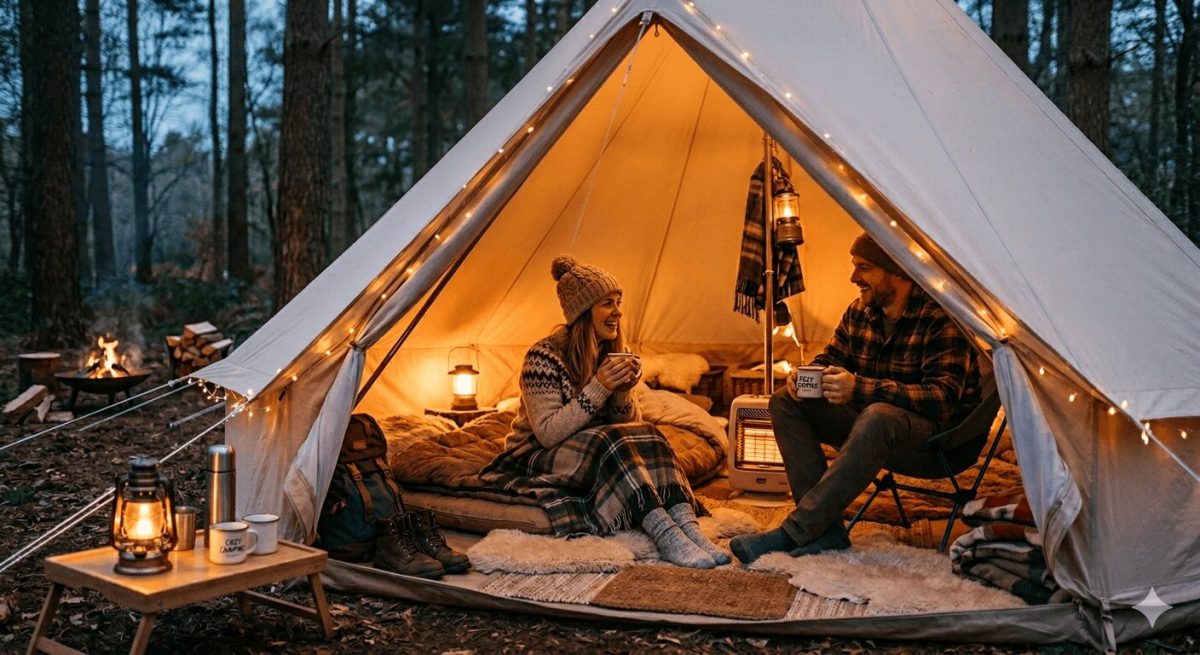
Camping is one of those things that sounds simple until you are lying in a tent at 2 a.m., wondering why you are suddenly freezing. Staying cosy outdoors is not complicated, but it does take a little planning.
Over time, I have realised it is often the small things that make the biggest difference. A few simple adjustments can completely change how comfortable a camping trip feels, including:
- Packing extra layers
- Creating a warmer sleeping setup
- Keeping essentials within easy reach
- Having reliable ways to stay warm
These small details can make the difference between counting down the hours until sunrise and enjoying a relaxing night under the stars.
If you are new to camping or have years of experience, there is always room to make your setup more comfortable. If you are just getting started, our guide to If you are new to camping, our top 10 camping essentials for beginners is a great place to begin.
In this guide, we share ten simple ways to stay cosy when camping:
- Sleep warmer throughout the night
- Stay comfortable during cooler evenings
- Create a more inviting campsite
- Enjoy the outdoors for longer
If you are heading away with family, meeting friends for a weekend outdoors, or planning a solo adventure, these tips will help make your next camping trip feel a little more like home.
Why Cosiness Matters More Than You Think
There is a reason we talk so much about the well-being benefits of camping. Being outdoors has been shown to reduce stress, lift mood, and help us reconnect with the people we care about most. But none of that happens quite as well when you are cold, damp, or uncomfortable. Getting the cosy basics right is not about being soft, it is about making space for everything good that camping has to offer.
Cosy Camping Ideas
1. Start With the Right Sleeping Setup
A good night’s sleep changes everything. Investing in a decent sleeping mat or air bed, along with a sleeping bag suited to the season, makes a huge difference. I have found that being slightly too warm is far better than lying awake wishing you had packed an extra layer.
When choosing a sleeping bag, pay attention to the temperature rating rather than just the season label. The comfort rating is the number to focus on; it tells you the temperature at which most people will actually sleep well, not just survive. For UK camping, a 3-season bag with a comfort rating around 0°C to −5°C covers most spring through autumn trips comfortably.
Helpful guides:
- Sleeping Bag Temperature Ratings Explained for UK Campers, a clear breakdown of what the numbers actually mean
- What Sleeping Bag Temperature Rating Do You Really Need?, practical advice for real UK conditions
- How to Pick the Right Sleeping Bag, North Face’s no-fuss guide to fill, shape, and warmth
Your sleeping mat is just as important as your sleeping bag. Cold comes up from the ground as much as from the air, and even the best sleeping bag will underperform on a thin or cheap mat.
2. Layer Rather Than Relying on One Big Coat
Cosiness outdoors is all about flexibility. Mornings can be cold, afternoons surprisingly warm, and evenings chilly again. Having easy layers, jumpers, fleeces, and a waterproof jacket lets you adjust without ever feeling caught out.
The outdoor world calls this a layering system, and it is one of the most practical things you can understand before any camping trip:
Base layer, sits against your skin, wicks moisture away
- Mid layer, insulates and traps body heat (a fleece is ideal)
- Outer layer, protects against wind and rain
The key rule: avoid cotton next to your skin. Cotton holds moisture and loses warmth quickly, which is the last thing you want on a cool evening. Merino wool or synthetic base layers are far better at keeping you comfortable as temperatures shift.
Helpful guides:
- The Layering System Guide, Cotswold Outdoor’s practical overview
- How to Layer Clothing for Cold Weather, Patagonia’s expert guide to staying dry and warm
- Expert Advice: The Layering System, GO Outdoors’ beginner-friendly breakdown
3. Bring More Blankets Than You Think You Need
There is something undeniably comforting about wrapping up in a blanket outside. Whether it is for sitting around in the evening or adding an extra layer at night, blankets quickly become one of the most used items you pack.
A good outdoor blanket does more than keep you warm; it becomes part of the experience. Draped over your lap by the fire, shared between two people watching the stars, or tucked around a child who has finally wound down. The right blanket is a quiet, constant companion on every trip.
If you are thinking about the materials in your blankets and outdoor gear, we have explored 10 natural fibres for outdoor blankets and our top picks for camping blanket wraps from UK brands if you want some inspiration.
4. Create a Small Living Space
Even a basic setup can feel cosy if you give it a bit of structure. A groundsheet, a couple of camping chairs, and somewhere to put a drink can turn a patch of grass into a space you actually want to spend time in.
Think of it less as a campsite and more as an outdoor living room. Some simple additions that make a real difference:
- A compact folding table for mugs, snacks, and small comforts
- A doormat or groundsheet outside your tent porch to keep mud out
- A windbreak if your pitch is exposed, it keeps warmth in and makes the whole space feel more contained and settled
- A blanket or cushion on your chair so you are genuinely comfortable sitting for long stretches
If you are exploring different tent options for creating that home-from-home feel, our wild camping guide and day camping guide have plenty of ideas for making the most of whatever setup you have.
5. Do Not Underestimate Warm Drinks
Tea, coffee, and hot chocolate are less about what you drink and more about the ritual of it. A warm mug in your hands on a cool morning or after sunset has a way of making everything feel more settled.
There is something almost meditative about the simple act of boiling a kettle at a campsite. The wait, the steam, the warmth spreading through your hands. It slows everything down in the best possible way.
Hot drinks also serve a practical purpose: warming you from the inside out. After a walk, before bed, or first thing in the morning when the temperature has dipped overnight, a warm drink is one of the quickest and simplest tools you have for getting comfortable again.
Some camping-friendly options worth having in your kit bag:
- A good insulated flask for keeping drinks hot for hours
- Instant hot chocolate sachets (genuinely one of the best camping decisions)
- A small camping kettle that sits stably on your stove
- Herbal teas for winding down in the evening
6. Keep Dry at All Costs
Damp clothes or bedding can undo all your efforts. Packing spare socks, a reliable waterproof, and a way to keep things off the ground inside your tent helps maintain that sense of comfort, even if the weather turns.
Staying dry is probably the single most important factor in staying cosy while camping. Here is a simple checklist:
- Pack at least two pairs of extra socks, because wet feet make everything feel miserable
- Store clothes in dry bags or waterproof stuff sacks inside your tent
- Bring a small towel for your feet when coming in from outside
- Use a tent footprint or groundsheet to prevent moisture from wicking up from below
- Keep your sleeping bag in its stuff sack or compression bag until you are ready to use it
For advice on navigating UK weather outdoors, our guide to how to create the perfect cosy campfire setup includes tips on positioning and shelter. And if you are camping in wetter months, our top 10 festival raincoats guide has some genuinely useful waterproof options.
7. Think About Lighting
Soft lighting goes a long way. Battery-powered lanterns or string lights make your space feel warm and inviting, rather than just functional. It is a small detail, but one that changes the atmosphere completely.
Harsh white light feels clinical and cold. Warm, soft light, the kind you get from a quality lantern on a lower setting, or from a set of fairy lights strung around your tent, creates the same feeling you get from candlelight at home. It signals to your brain that it is time to relax.
Some lighting ideas worth exploring:
- A rechargeable camping lantern with a warm-white setting (not just a harsh torch function)
- Solar-powered string lights that charge during the day and create a glow in the evening
- Battery-powered fairy lights wound around the inside of your tent for a cosy, ambient effect
- A small battery candle for the table, no fire risk and genuinely lovely
Helpful Guides:
- Best Camping Lanterns and Lights 2026, Live for the Outdoors tested a range across multiple camping trips
- Best Camping Lanterns Reviewed, BBC Country-file’s guide to finding the right option
- Best Camping String Lights 2026, if you want to create a proper ambience at your pitch
8. Bring Familiar Comforts From Home
A favourite jumper, a well-used mug, or even your usual pillow, these small, familiar items can make an unfamiliar environment feel much more relaxed and personal.
There is real psychology behind this. Familiar objects cue your brain to relax in ways that even the best camping gear cannot always replicate. You do not need to pack your whole home, but a few intentional choices make a surprising difference:
- Your own pillow (or at least a favourite pillowcase over an inflatable one)
- A book or journal you are currently into
- A small photo, a card, or something that belongs to your everyday life
- A playlist of music you associate with unwinding
These are the kinds of details that turn a camping trip from something you endure into something you genuinely look forward to repeating.
9. Plan Easy, Satisfying Food
You do not need anything elaborate, but having meals you actually look forward to makes a big difference. Simple, warm, filling food adds to that feeling of being properly looked after, even outdoors.
Camping food does not have to mean plain and functional. Some of the most satisfying meals I have had have been outdoors, partly because everything tastes better in the fresh air, and partly because the effort of making something simple from scratch feels like an achievement.
Some ideas for easy, warming camping meals:
- A flask of hearty soup made at home and reheated on arrival
- Pasta with a rich tomato sauce (prep the sauce ahead and reheat)
- Porridge with fruit and honey for cool mornings
- One-pot curries or stews that only need a single hob
- Classic campfire toast with proper butter
For more inspiration, the Camping and Caravanning Club’s easy camping meals guide has some genuinely practical family-friendly recipes. And Experience Freedom’s camping meals guide is full of ideas that work for all ages.
10. Slow Everything Down
More than anything, cosiness comes from how you spend your time. Sitting a little longer, talking without distraction, or just watching the light change in the evening, those slower moments are often what make camping feel so worthwhile.
We talk a lot on this blog about the science-backed health benefits of being in nature, and one of the most consistent findings is that time outdoors reduces stress and restores our ability to simply be present. Camping creates a natural invitation to slow down, but it is easy to fill that space with busyness and screens if you are not intentional about it.
Some simple ways to honour the slower pace that camping offers:
- Leave your phone in the tent for the first hour after you arrive, just settle in
- Eat without screens, it sounds obvious but it changes the whole experience
- Go for an evening walk before dinner rather than staying on your pitch the whole time
- Talk rather than watch, camping is genuinely one of the best settings for real conversation
Research from Breathe the Outdoors highlights that even a single night away in nature produces measurable improvements in mental well-being. That slow evening by the fire is doing more for you than it might feel like in the moment.
The Cosy Camping Mindset
Camping will never feel exactly like home, and that is part of the appeal. But with a bit of preparation, it can still feel warm, comfortable, and genuinely restful, the kind of cosiness that comes not from perfect conditions, but from being present and well prepared.
The best camping trips tend to involve a combination of the practical (the right gear, the right layers, dry socks) and the intentional (slowing down, putting the phone away, choosing food you love). Neither one is enough on its own.
If you are planning your next trip and want to think about where to go, our best camping staycations in the UK and best sustainable campsites in the UK are full of inspiration. And if you want to make your trips more sustainable as well as cosy, our 50 ways to make your camping trip more sustainable is a brilliant companion read.
Keep up-to-date with camping tips and advice, subscribe to the newsletter below: