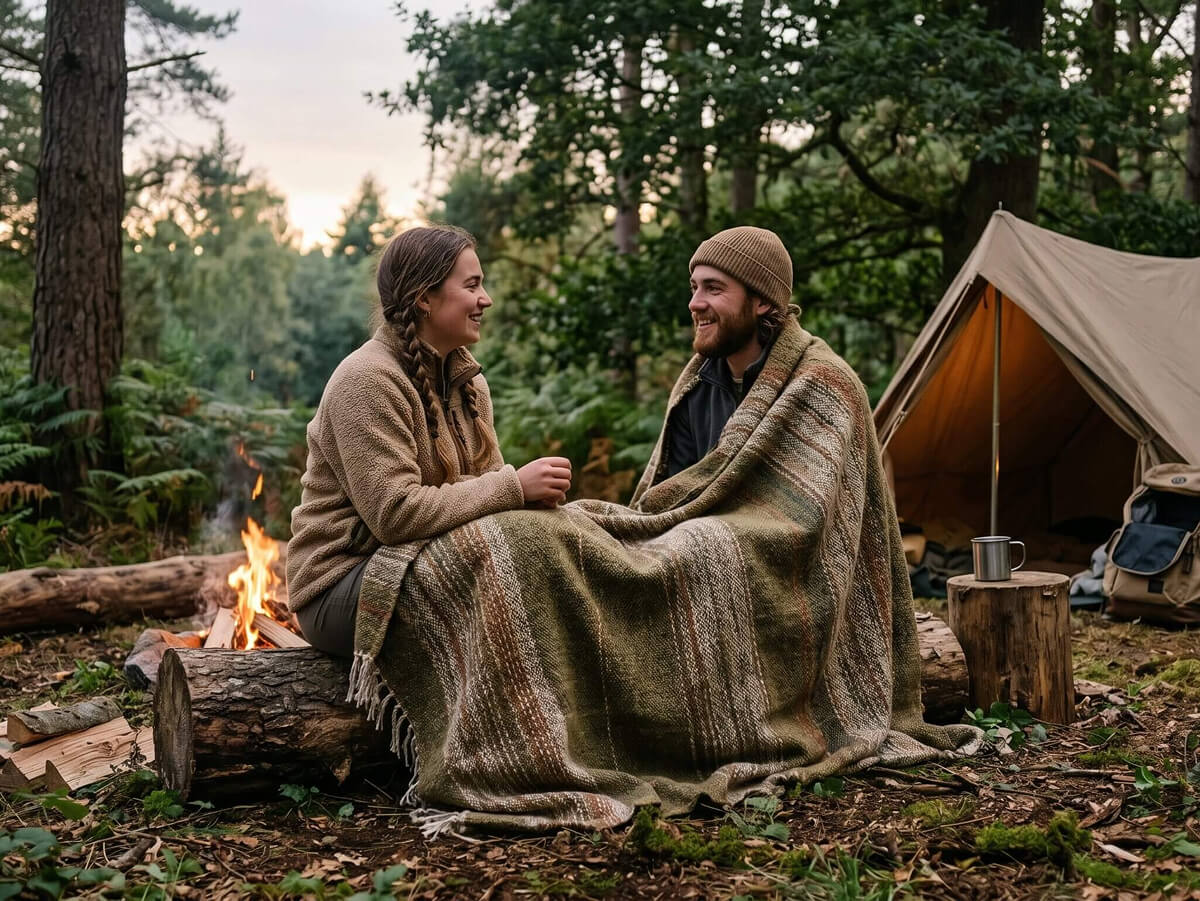
Your camping blanket is getting a serious upgrade.
Forget scratchy synthetic fleece and petroleum-based polyester. A quiet revolution is happening in outdoor textiles, and it is growing from the most unexpected places. Mushroom roots. Seaweed. Pineapple leaves. Orange peel.
Natural Materials
Material scientists, designers, and outdoor brands are reimagining what a camping blanket can be made from. And the results are warmer, lighter, more sustainable, and honestly, more interesting than anything a factory floor has produced before.
Everyday Camping Gear
The best part? These innovations are not just for high end expedition gear. Many could soon appear in everyday camping blankets, picnic rugs, and travel throws, the kind you wrap around yourself at the campfire on a cool evening.
Why It Matters
Here is what is coming, and why it matters for the way we camp.
Why Natural Fibres Are Having a Moment
Most blankets today are still made from:
- Polyester — derived from fossil fuels
- Acrylic — a plastic-based fibre
- Microfibre — sheds microplastics every wash
These materials are cheap and soft, but they come at a cost. They are difficult to recycle, often end up in landfills, and release tiny plastic particles into waterways every time you wash them.
WRAP UK has published research highlighting the urgent need for natural fibre alternatives and the outdoor industry is starting to listen.
The next generation of camping textiles is being grown, fermented, and woven from nature itself. Here are the ten most exciting materials leading the way.
1. Mycelium Fibre (Mushroom-Based Materials)
Nature’s most underrated material is growing underground right now.
Mycelium is the root structure of fungi and when grown in controlled conditions, it forms soft, felt-like materials that are:
- Fully biodegradable
- Naturally insulating
- Grown using agricultural waste
- Produced with very little water
Most people know mycelium from vegan leather bags and shoes. But researchers are now exploring softer mycelium textiles for insulation, rugs, and eventually blankets.
Imagine a thick, naturally warm mushroom-fibre throw replacing your synthetic fleece, perfect for a cosy campfire evening. The Ellen MacArthur Foundation has highlighted mycelium as one of the most promising materials in the circular economy.
2. Bacterial Cellulose Fabric
Yes, this is as futuristic as it sounds.
Bacterial cellulose is grown through fermentation, the same process used to make kombucha. The result is an ultra-fine natural fibre network that is:
- Incredibly soft
- Breathable
- Lab-grown with minimal land use
- Potentially scalable without traditional farming
Right now it is mostly used in experimental fashion. But its lightness and breathability make it a fascinating candidate for the next generation of outdoor bedding.
3. Pineapple Leaf Fibre (Piñatex)
Every pineapple harvest leaves behind tonnes of leaves, usually burned or discarded.
Instead, companies are now extracting those fibres and weaving them into durable natural textiles. Piñatex is best known as a leather alternative, but pineapple fibres can also be blended into softer fabrics for:
- Textured woven throws
- Decorative camping blankets
- Cushion fabrics and upholstery
Ananas Anam, the pioneers behind Piñatex, work directly with farming communities in the Philippines, turning waste into income and waste into textiles.
A beautiful example of circular design in action.
4. Seaweed and Algae Fibres
Seaweed might be the most sustainable fibre on the planet.
It grows incredibly fast. It absorbs carbon dioxide. It needs no farmland and no freshwater. Companies are already blending seaweed into soft yarns that feel similar to cotton or viscose.
For camping blankets, seaweed fibres offer something special:
- Naturally breathable
- Soft against skin
- Moisture regulating
- Lightweight and packable
They could become the go-to material for cooling summer blankets, ideal for a day camping trip in the UK on a warm afternoon. The Sustainable Apparel Coalition tracks algae textiles as one of the lowest-impact materials in development.
5. Orange Peel Fibre
Luxury fabric made from breakfast waste. Really.
Italian innovators developed a process that transforms discarded orange peels into silky cellulose yarns, soft, with a subtle sheen similar to silk or satin.
Right now it is aimed at premium fashion. But imagine that softness blended into a luxury camping throw, the kind you pull around yourself at a glamping weekend in the Cotswolds.
Food waste becoming beautiful textile. That is circular design at its finest.
6. Cactus Fibre Materials
In a world facing water shortages, the cactus might be the fibre crop of the future.
Cactus plants need almost no water and thrive in harsh climates. Softer cactus-derived fibres and bio-resins are now being explored for:
- Soft woven throws
- Eco-upholstery
- Lightweight blankets
This connects naturally to the growing movement of eco-friendly camping in the UK, where sustainability runs through every choice, from your campsite to your kit.
7. Banana Fibre
Nothing goes to waste when every part of the plant has a purpose.
After the fruit is harvested, the banana plant stems are usually discarded. But processed correctly, they produce surprisingly strong, durable fibres with a warm rustic texture, ideal for:
- Chunky woven camping blankets
- Artisan throws
- Layered home décor fabrics
Banana fibre is naturally biodegradable and supports farming communities by turning crop waste into income. It has exactly the kind of warmth and texture that fits the handmade, natural aesthetic of cosy camping.
8. Hemp Fibre
Hemp is one of the oldest fibres in human history and it is back for good reason.
It grows fast. Uses little water. Needs far fewer pesticides than cotton. And modern processing has made it genuinely soft, unlike the scratchy hemp of previous generations.
Blended hemp fibres are now being used for:
- Heavyweight camping blankets
- Durable thermal throws
- Long-lasting outdoor bedding
Textile Exchange tracks hemp as one of the fastest-growing preferred fibres in sustainable outdoor gear. For anyone planning a wild camping trip in the UK, a hemp blanket is a natural, durable, and planet-friendly choice.
9. Bioengineered Spider Silk
The stuff of science fiction, becoming science fact.
Spider silk is extraordinarily strong, lightweight, and flexible. Scientists are now producing spider silk proteins through fermentation rather than farming spiders, opening the door to textiles that are:
- Warm but featherlight
- Incredibly durable
- Completely free of petroleum-based synthetics
Still expensive, but spider silk biofabrication is advancing fast. It could sit alongside the best camping blankets available today within a decade.
10. Regenerative Wool Alternatives and Hybrid Biofibres
The most exciting innovation is not one material; it is many working together.
Companies are developing hybrid fabrics that combine natural fibres like wool, hemp, algae, and cellulose into textiles that:
- Feel genuinely luxurious
- Last far longer than synthetics
- Shed zero microplastics
- Fully biodegrade at end of life
For blankets specifically, this matters enormously; polyester fleece releases microplastics into waterways every single wash. WRAP UK has made reducing synthetic textile waste a key focus of its environmental research.
A future sustainable camping blanket might combine hemp for strength, seaweed for softness, mycelium for insulation, and bacterial cellulose for breathability. And it might feel better than anything available today.
The Bigger Picture
This is not just about materials. It is about how we camp, what we value, and the kind of outdoor experiences we want to create.
The wellbeing benefits of camping are well-documented and they are amplified when your kit is natural, tactile, and made with care. There is something deeply satisfying about wrapping yourself in a blanket grown from the earth rather than pumped from a oil well.
It matters for the people around you too. Research shows that camping improves relationships and communication with family and friends and the moments that create those connections often happen under a blanket, around a fire, away from screens.
The science of being in nature backs this up. What you surround yourself with outdoors matters and natural fibres are part of that story.
Find Out More
UK Outdoor Brands Worth Knowing
- Snugpak — West Yorkshire outdoor gear, sleeping bags and insulated blankets
- Rab — Sheffield-founded alpine brand, circular design focus
- Alpkit — Independent UK outdoor brand, repair programmes and recycled materials
- VOITED UK — Camping blanket specialists, recycled ripstop outdoor blankets
Explore More
- WRAP UK — Textiles and Microplastics
- The Guardian — Sustainable Fashion
- Ellen MacArthur Foundation — Circular Textiles
For more sustainable fabrics, check out the Collette Costello collection, cosy camping blankets and accessories, made in Manchester, designed for outdoor moments that matter.
Keep up-to-date with camping tips and advice. Subscribe to the newsletter below: